How to play (TNChatZone rules)
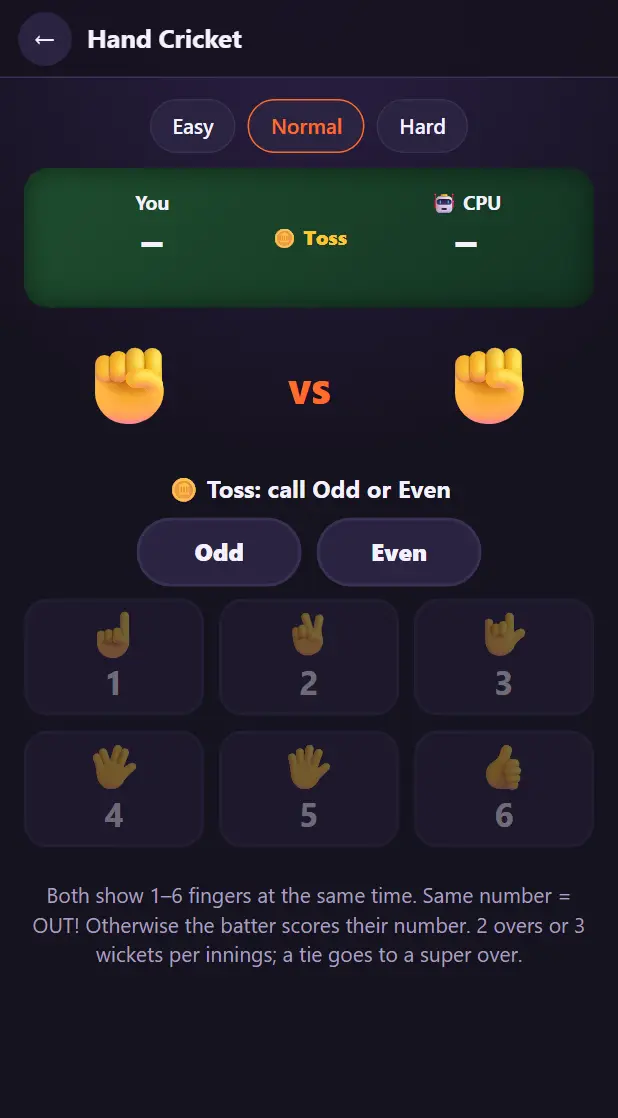
- Toss. One player calls Odd or Even, then both show a number from 1 to 6. If the two numbers added up are odd and the call was Odd (or even and the call was Even), the caller wins the toss.
- Bat or bowl. The toss winner chooses to bat first or bowl first.
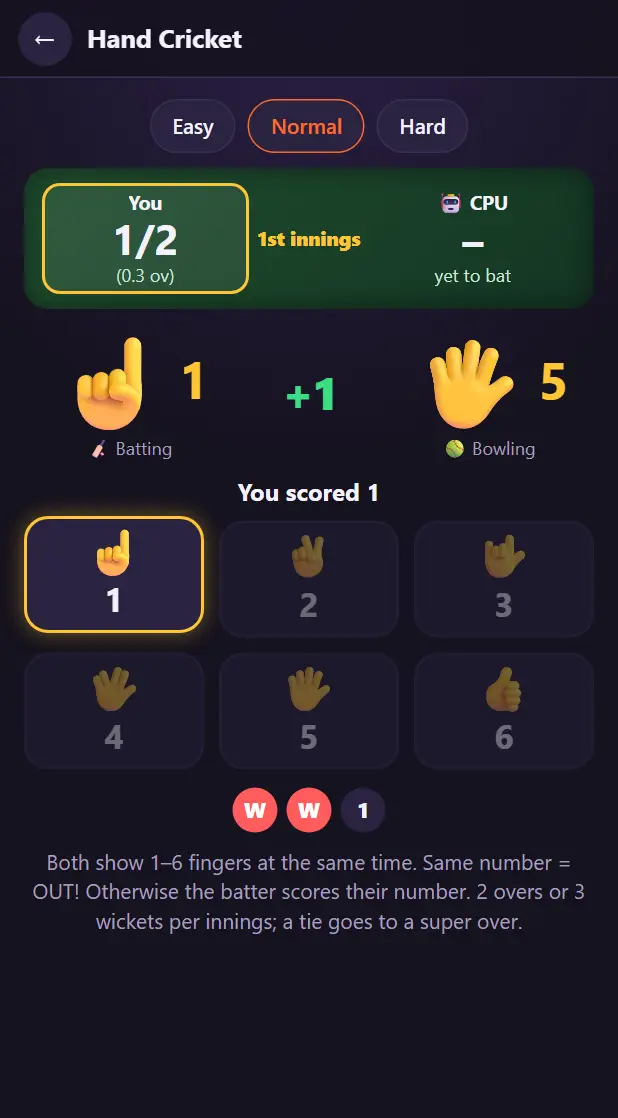
- Every ball. Batter and bowler each pick a number from 1 to 6 at the same time. Nobody sees the other number until both have picked.
- Out or runs. Same number = OUT. Different numbers = the batter scores the number they showed (show 6 for a six!).
- Innings. An innings lasts 2 overs (12 balls) or until 3 wickets fall, whichever comes first.
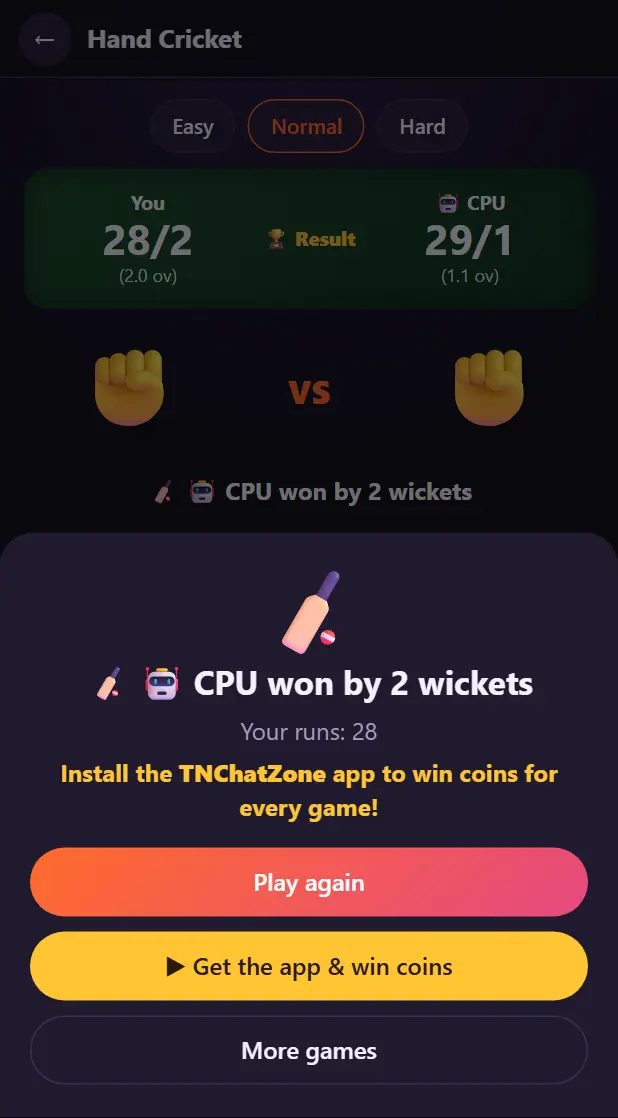
- The chase. The other side then bats with a target of one run more than the first score, and wins as soon as it gets there.
- Tie. Scores level after both innings? A super over decides it: 6 balls or 1 wicket each. If it is still level after two super overs, the match is a draw.
- Timer. In app matches each ball has a short time limit. If you do not pick in time, a number is picked for you.
Hand Cricket screenshots
Tips and strategy
Hand cricket looks like pure luck, but over 12 balls habits start to show. Most people have a favourite number, and many avoid repeating the number that just got them out.
- Batting: big numbers score more, but a bowler who has seen you play three sixes in a row will start showing 6. Mix in small numbers to stay at the crease.
- Bowling: watch the batter's last few numbers and aim at the one they pick most.
- Chasing: when you need only a few runs, safe singles and twos are often enough. When you need a lot from a few balls, it is time to take risks.
Know the levels
Easy picks at random. Hard remembers the numbers you have shown in this match: as bowler it aims at your favourites, as batter it avoids the numbers you bowl most. Normal is in between.
A sample over, ball by ball
Here is how a short over can go. You win the toss and choose to bat. On the first ball you show 4 and the bowler shows 2, so you score 4. On the second ball you show 6 and the bowler shows 6: same number, you are out with 4 runs on the board. Your second wicket starts carefully with a 1 against a 3, then a 5 against a 2 takes you to 10. The fifth ball is a 2 against a 2, out again. With one wicket left you play safe and finish the over on 12 for 2.
In the chase your rival needs 13 to win. Every ball is a small guessing game: they want big numbers, you want to match them. If they lose 3 wickets or use up the 12 balls before reaching 13, you win; if they get there, they win at once, and the scoreboard shows by how many wickets and how many balls were left.
A school-bench classic
Long before phones, children across India played cricket with nothing but their hands: one hand up, fingers out, and a quick call of the score. It needs no bat, no ball and no ground, which is why it was played in classrooms, buses and lunch breaks. Showing a thumb for six is a common local rule, and the odd or even toss is how many a street match started.
Play friends in the TNChatZone app
In the app Hand Cricket is a live one-on-one match. Both numbers are kept by the server until both players have picked, so nobody can peek. If nobody is around, a 🤖 bot plays at Easy, Normal or Hard. Share your scorecard when the match ends. Coins you win in the app are for fun and have no cash value.
FAQ: Hand Cricket
How do you get out in hand cricket?
When the batter and the bowler show the same number on a ball, the batter is out.
How long is a match?
Each side bats for 2 overs (12 balls) or until 3 wickets fall. The side batting second stops as soon as it passes the target.
What happens on a tie?
A super over: 6 balls or 1 wicket each. After two tied super overs the match is a draw.
Is there a computer opponent?
Yes. Play the 🤖 CPU on Easy, Normal or Hard any time, and a 🤖 bot fills in for online matches when nobody joins.
Can the other player see my number?
No. Both numbers stay hidden until both players have picked, then they are shown together.